
NM work

Musea via cognitionis
with Marco Silvestro
How many times have we seen the eyes of students light up when asking about our work. But what is employment actually like within the museum system and, more broadly, across the vast cultural landscape, from education to theatre? What is the purpose of this work, beyond putting food on the table? Discussing this openly, without alternative motives, would be a major breakthrough. Network Museum Lavoro aims to keep doing just that. Together with you.
“NM lavoro” is not merely the title of a section within our scientific publication; it represents a dedicated project aimed at researching and analyzing the complex dynamics of the “labour market” within the cultural heritage sector and related fields.
Beyond the differing interpretative sensitivities that the definition of “labour market” may evoke, the objective of our project is to adopt a scientific perspective centred on the concept of an “employment system”. Indeed, we aim to investigate, from a qualitative standpoint, the actors, the distinctive traits, and the behavioural patterns that characterize entry and operation within this sector.
Our inquiry intends to give a voice both to those already operating in the field, in any capacity, and to those who, upon completing their academic journeys, aspire to become a part of it. In parallel, the analysis will involve employers, in the hope that the significance of this debate might foster a more productive, objective, and civil dialogue between those who manage cultural heritage and those who, like us, study its impact on society.
To our guests, to whom we extend our utmost esteem and gratitude for placing their trust in this initiative, we propose the examination of a broad spectrum of topics. The goal is to reflect on cultural employment from multiple perspectives: from youthful vocation to the time required to achieve true socio-economic autonomy; from the concept of employment to that of a career; from the social perception of cultural professionals to the effectiveness of public financial support for skills development. Furthermore, we will examine whether the current university and post-graduate educational offerings are genuinely capable of preparing human resources that meet the actual needs of the sector.
While interviewing a museum director requires a considerable amount of patience, conducting a systematic investigation into employment proves to be an even greater challenge. Throughout our work, we are encountering a widespread reluctance to speak out publicly among operators in the sector; a silence that often masks a structural resignation and speaks volumes about the systemic criticalities regulating labour relations in this field. Even the younger generations sometimes seem led to consider dialogue and the sharing of their experiences as futile, giving the troubling impression of a system fatally destined to accept the unacceptable.
These findings merely confirm a concern that has matured over our forty years of activity as scholars: the widespread perception that the strategic importance of knowledge for the individual and the community is not fully grasped. There is a concrete risk that the tangible cultural heritage system is folding in on itself, becoming increasingly self-referential, aestheticized, and even hedonistic, excessively oriented toward social appearances and exclusive privileges to the advantage of a select few within the system.
We open the “NM work” section of this seventh season of our website with a young colleague from Turin, who has always been passionate about culture, and wishes to make cultural mediation his professional life: Marco Silvestro.

Marco Silvestro
Born and raised in Turin, he completed his education in the Piedmontese capital, culminating in a Bachelor’s degree in Cultural Heritage in July 2025 from the University of Turin. Having graduated from the “Renato Cottini” State Art High School in 2021, his educational path led him to develop a deep desire to explore art history, a field that has always fascinated him and resonates closely with his personal sensibility. His high school years helped him practically engage with artistic disciplines such as painting, drawing, graphic design, sculpture, and modelling, allowing him to acquire a comprehensive vision of what it means to “make art” in all its facets.
The decision to pursue his studies in a more theoretical university setting, rather than a practical academy, was guided by a reflective and introspective nature. This disposition drove him to study art and its related disciplines to fully comprehend its historical, technical, and stylistic aspects. This inclination was also essential in drawing him toward the study of aesthetics, the branch of philosophy concerned with art, the nature of beauty, judgments of taste, and their connection to the human condition. In line with these interests, he chose to dedicate his final university dissertation to the Hegelian theme of the “end of art” and its relationship with 20th-century philosophy, analyzing its developments within contemporary art.
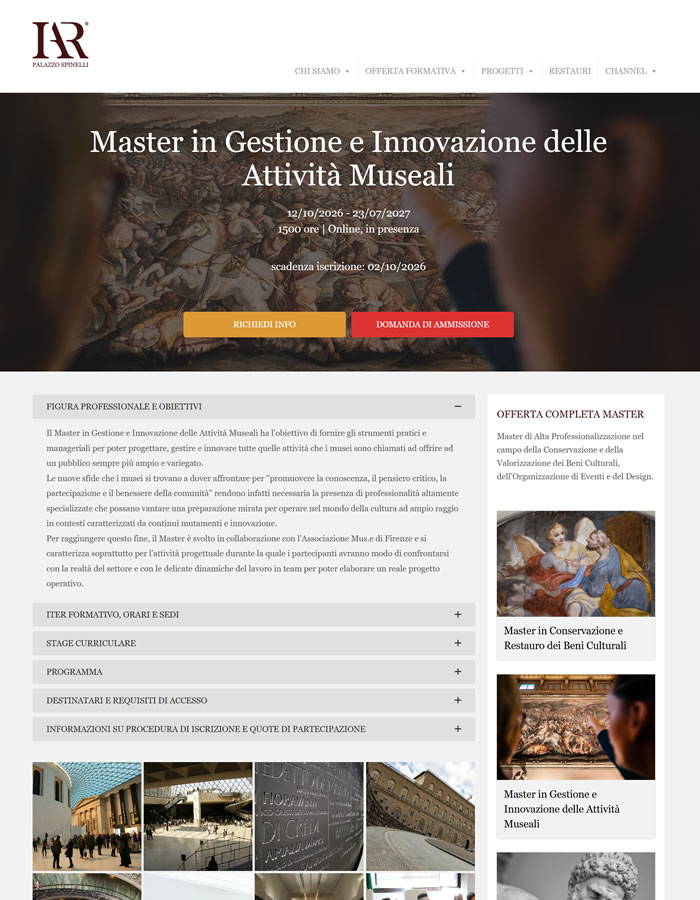
After completing his undergraduate cycle, he felt the need to embark on a path that would allow him to apply the skills he had acquired directly in the field. For this reason, he decided to move to Florence to attend the First-Level Master’s program in Management and Innovation of Museum Activities at the “Palazzo Spinelli” Institute for Art and Restoration.
He is currently completing this program through an internship at the MUS.E Foundation, the institution responsible for managing and promoting Florence’s civic museums on behalf of the City Council. The museum sector in which he is specializing is cultural mediation.
Network Museum
Who is Marco Silvestro?
Marco Silvestro
I am a 23-year-old student, born and raised in Turin. Currently, I am in Florence pursuing a First-Level Master’s degree in Management and Innovation of Museum Activities at the “Palazzo Spinelli” Institute for Art and Restoration. I earned my Bachelor’s degree in Cultural Heritage, with a focus on Art History, in Turin. Right now, I am tackling the final stage of my specialization program: a curricular internship in Florence with the MUS.E Foundation, a non-profit organization responsible for managing and promoting the civic museums of the Municipality. Specifically, I work within the cultural mediation sector, which serves as a 360-degree interface between the public and the museum. This field ranges from research and workshops to integrated projects for children, as well as specialized initiatives for vulnerable audiences or the elderly. My role consists precisely of acting as a filter and a bridge between cultural heritage and people of all backgrounds and categories.
Network Museum
What is culture, and what is its purpose?
Marco Silvestro
It is a very complex question to answer, but I would define culture, first and foremost, as a human resource. It is the collective body of knowledge of diverse origins and natures that generates an identity, both for individuals and for groups, fostering a deep sense of belonging. Culture connects what came before us with our present. Many tend to identify it simply with mere knowledge or the accumulation of information, but I believe it is also measured through psychological, strategic, and emotional intelligence. It is the ability to appropriately manage situations and to position oneself correctly within the social system, across all its layers, from the family unit to large corporations.
Network Museum
What is a museum, and what is its role?
Marco Silvestro
Rather than a mere institution, a museum can be defined as a space within which information is preserved in the form of objects, graphics, sound elements, and testimonies. At the same time, it is a place where research is conducted: a literal safe of knowledge open to researchers, scientists, scholars, and ordinary people alike. Its fundamental role is to ensure that this information is properly preserved so it can endure through years, decades, and centuries. In this way, cultural heritage transforms into a structure of potential that can be utilized by as many people as possible, constituting an essential pillar of identity for the city, the region, and the State that hosts it.
Network Museum
What does it mean to work, and what place does it occupy in the configuration of your existence?
Marco Silvestro
In the contemporary context, this is not an easy answer. I believe that work is a fundamental element for the individual, as it constitutes the pivotal factor that grants dignity and freedom to people. Work should fulfill human beings, allowing them to express their potential, their knowledge, and their capacity to build something that serves a useful purpose within society. As for the museum sector, although I am not yet a fully-fledged worker but an intern, I think that a cultural mediator should not conceive of their activity in the traditional sense of the word, but rather as a mission. They must consider themselves a bridge between something greater than them, a collection, an artifact, an object of civic value, and everything that lives outside the magic chest of the museum: society, people, and individual citizens who wish to internalize that value to grow as human beings. I aspire to be someone who lives and breathes the museum, art, and culture as tools to generate well-being in others, based on the premise that the proper management of cultural sites is fundamental to collective well-being.
Network Museum
How did your vocation to work in the cultural heritage sector come about, and how did you imagine a job in this field before starting your course of study?
Marco Silvestro
This path is the result of a clear personal evolution that took place over the years. Since I was a child, I have always been strongly attracted to art as a form of expression, from drawing to music, and I have always prioritized these channels of communication. I realized early on that this was the area where I could express my best qualities, as if it were a specific hardwiring of my brain. During my pre-adolescence, I followed this inclination by directing my studies toward an art high school, cultivating a passion for art history. Subsequently, choosing the Faculty of Cultural Heritage was the natural consequence of wanting to acquire further methodological tools to understand heritage on a historical, factual, and managerial level. However, after my university experience, I felt an excessive lean toward theory and a lack of practical field application regarding the actual procedures of the sector within the Italian university system. For this reason, I chose the master’s program in Florence: I wanted to concretely dive into the internal dynamics of museums, understanding them not only as cultural institutions but also as businesses that have revenues, internal procedures, employees, and precise obligations to offer a heritage accessibility service to the public.
Network Museum
Does the educational system provide proper information on how to enter the cultural sector professionally, or is it necessary to navigate it independently?
Marco Silvestro
The educational system does not provide this type of guidance. Throughout my journey, the art high school gave me excellent factual and conceptual foundations. Thanks to a few dedicated teachers, I was able to participate in very interesting internal projects in Turin, including collaborations with the Associazione Nazionale Partigiani Italiani (ANPI), but these were activities strictly internal to the school. They did not offer a real connection to or actual knowledge of the job market and the professional field outside. In terms of actually entering the sector, the school provided me with no concrete links whatsoever.

Network Museum
How is the choice to work in this sector perceived within your social and family circles?
Marco Silvestro
I have been very fortunate in this regard, as my parents have always supported me and understood my inclination. Even though I wasn’t a particularly bookish student during my adolescence, an aspect I improved upon over time as I realized its importance, my family recognized the dedication I poured into my vocation. My mother, in particular, was the first to push me toward the decision to move from Turin to Florence to attend the master’s program. It was a choice that involved significant financial sacrifices, which my family willingly made to provide a solid foundation for my future. I am very proud of this, because finding a family unit that understands and values these inclinations is by no means something to take for granted.
Network Museum
Were there any reference figures or role models who inspired your choice to pursue this career?
Marco Silvestro
Cultural and scientific dissemination has always interested me deeply. Certainly, the Angela family has always provided very positive inspiration; I find that their model of cultural transmission is incredibly useful for young people. However, rather than a single role model, my main source of inspiration was the opportunity, given to me by my family, to travel extensively both in Italy and abroad, experiencing museums firsthand and approaching cultural heritage alongside my school studies.
Network Museum
What are the critical aspects you encountered during your university and post-graduate training?

Marco Silvestro
In my view, the primary limitation of the Italian university preparation lies in the low flexibility granted to students within academic plans due to overly rigid structural constraints. It is proper for there to be a fundamental backbone linked to the chosen path (such as art history exams for the historical-artistic track), but the levels of difficulty and approach to the subject matter should be better differentiated. It is not functional to subject a 19-year-old student, fresh into university, to massive, high-impact exams like Medieval Art History approached in an exclusively memory-driven and obsessive manner. The Middle Ages span a millennium of European artistic production; tackling it right away through a mere list of names, dates, and facts creates immense difficulties and risks alienating the student. If the discipline were also approached through an emotional, psychological, and spiritual lens, the student would be encouraged to perceive it as an engaging journey rather than sterile cataloging. The error lies precisely in focusing too much on the isolated piece of data.
Network Museum
What, on the other hand, are the positive aspects you encountered during your academic journey?
Marco Silvestro
The most positive aspect was the wide differentiation of the disciplines offered. During the three-year course, I had the opportunity to engage with subjects that were distant from one another yet fundamental for anyone working in culture, receiving an essential grounding in fields such as administrative law, cultural heritage law, palaeography, bibliography, and archaeology.
Network Museum
Now that you are close to the finish line, can you describe whether what you envisioned as a training and career entry path matches the reality you are experiencing and that awaits you? What are the aspects that limit, hinder, or obstruct access to work in the cultural heritage field? Without resorting to hard-to-define criteria like meritocracy, do systems exist that are capable of capturing potential, innovative ideas, and advantageous planning even from new human resources entering the sector?
Marco Silvestro
Before stepping into the real working world, I don’t think I ever had a concrete idea of what it meant to operate in culture, also because the academic path was not geared toward an immediate goal. Having reached this point, I realize that the knowledge acquired is not enough. The professional reality within a cultural institution is not presented in the slightest during university studies, which is why many graduates find themselves forced to continue with additional years of master’s degrees or specialized courses to understand the actual functioning of the sector. There is a sharp distance between academic theory and practice. University museology focuses on grand theories and superficial, uncontextualized information. Consequently, students struggle to concretely understand the complex political and economic dynamics underlying the organization of an exhibition, the movement of artworks, heritage ownership regimes, and the civic and social role that museums play as state or local authority institutions. The university offers very few practical tools in this regard; in my case, the master’s experience was fundamental to interfacing with experts and professionals in the field, allowing me to truly comprehend this fabric.
Network Museum
Is there a job “market” in this field? What dynamics have affected you so far, and which ones are you aware of? What professional positions operate within cultural heritage management, and which ones would you aspire to hold? Do you feel you fully know all the professional figures and their interactions within cultural heritage management? Do you feel prepared to face the professional commitment?
Marco Silvestro
The professional stratification within cultural heritage is massive. In Italy, cultural heritage holds a strong identity value, which entails constant vigilance and top-down control by multiple institutes and bodies. This creates a complex limitation in terms of decision-making freedom, movement, and economic-financial management. Through my internship at the affiliated foundation of the Municipality of Florence, I discovered the immense background work that remains invisible to the public: bibliographic research, archival activity, financial sustainability studies, and resource management. These are dynamics that educational institutions do not teach and that can only be learned on the field. Do I feel ready to face this market? Not entirely. I feel the need to gain further operational experience, as the mechanisms for entering the sector are not yet fully clear.
Network Museum
How is the professional status of those working in the cultural sector perceived within contemporary society?
Marco Silvestro
Every day, I encounter an enormous general ignorance regarding the specializations within this sector. In the common perception, almost no one knows what a cultural mediator, a museum director, or an art critic actually does. I believe that the media and television narrative is extremely deficient. Although documentaries on artistic heritage are frequent and widespread, most people do not deepen their knowledge of these professions, deeming them distant, lacking in practical utility, or, conversely, excessively elementary compared to other traditional jobs. Even older relatives express distrust or misunderstanding toward these choices, as society is deeply rooted in the idea that real work means an office, a factory, a shop, or something linked to engineering and mathematical design, whereas the museum is perceived exclusively as a space for temporary leisure.
It is a complex cultural vision to eradicate in Italy. Abroad, the perception is different, but in our country, there is still a great deal of work to be done to foster an understanding of the complexity of these figures, which require a profound intersection of disciplines and years of study. The very figure of the cultural mediator is constantly trivialized, despite the high complexity of their training.
Network Museum
In what timeframe and under what conditions do you believe it is possible to achieve full economic independence while working in this sector?
Marco Silvestro
Considering the current historical context, the shrinking purchasing power of salaries, and the general increase in costs, I believe that achieving real economic stability could take at least a decade from now, placing this threshold around 33-35 years of age. Interfacing with colleagues in the sector, I find that entry-level salaries are extremely low, to the point of often requiring a second job. Unfortunately, this necessity collides with the high number of hours demanded by fieldwork and the constant independent study that a cultural mediator must undertake daily to keep their skills updated. There is no adequate remuneration relative to the complexity and sensitivity of this profession.
Network Museum
What meaning do you attribute to the term “career” within your professional path?
Marco Silvestro
I consider the term “career” as a synonym for journey and evolution, rejecting a strictly economic or merely pragmatic view of the concept. For me, a career represents a constant development through stages of personal, cognitive, and conscious growth, which will progressively lead me to hold roles of greater responsibility. Life is an uphill road toward a high goal that allows for full self-fulfillment. At the same time, I recognize that the definition is highly subjective: a career can also mean performing the same job for forty years with dedication and consistency, without this diminishing its value.
Network Museum
Is it possible to do business in the cultural heritage sector in Italy?
Marco Silvestro
Within the Italian context, I believe it is very difficult, as there is a lack of real willingness to connect heritage management with external skills and bodies to elevate its standards and bring it closer to the contemporary technological languages used by the audience. Institutions do not fully realize the speed at which the digital world moves compared to the static nature of the analog approach applied to cultural heritage. Instead, it would be fundamental to develop a serious corporate and associative consideration of this sector; integration with new technologies could give life to projects of great interest, capable of simplifying processes and generating new professional opportunities.
Network Museum
Do the university system and institutional bodies adequately support specialized profiles in entering the job market?
Marco Silvestro
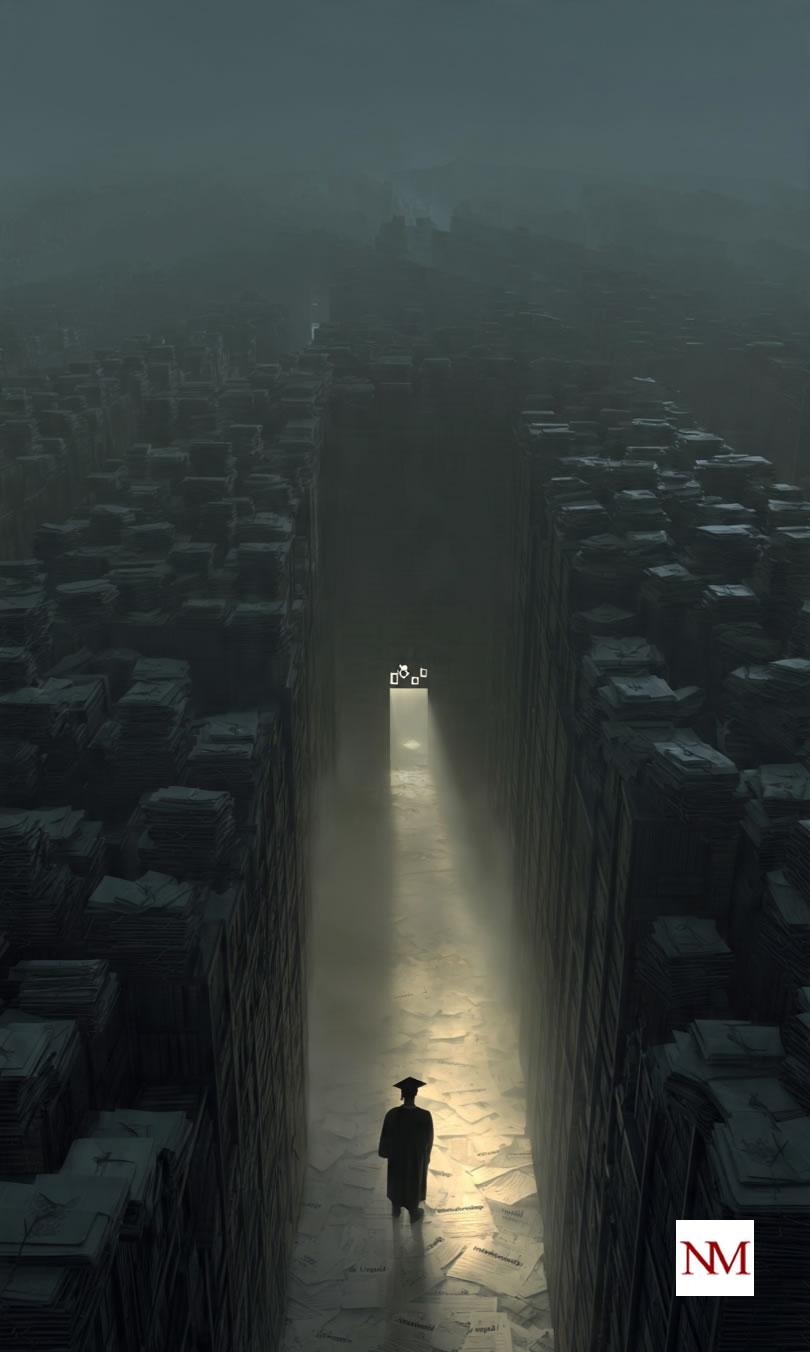
To the best of my knowledge, the answer is absolutely negative. The cultural sector is one of the most complex in Italy from the perspective of job placement. Entry occurs almost exclusively through the individual’s spontaneous initiative, who must invest substantial economic and time resources to string together academic paths, master’s degrees, specializations, and internships in the hope of placement, as institutional recruitment channels are extremely rare. Universities do not provide transparent statistical data or employment probability indexes at the time of enrollment; there is no conscious and serious discussion about the external job market outside the academic bubble.
Network Museum
Are there structured forms of financing or banking concessions to support students through high-cost specialization paths?
Marco Silvestro
On paper, merit-based financing systems exist, provided by certain banking institutions to students with excellent academic records. These are student loans (prestiti d’onore) that can reach significant amounts, from 30,000 to 50,000 euros, with very long repayment plans, even on a thirty-year basis. Theoretically, there are also credit lines for smaller amounts intended for students who do not meet these merit criteria, but in my practical experience, these opportunities proved to be inaccessible. For months, I submitted formal requests to support the costs of my relocation and master’s degree in Florence, considering it a fundamental investment in myself, but the access requirements were not deemed satisfactory by the banks, forcing me to resort to private channels. This represents an enormous limitation that holds back many high-level students, depriving them of the chance to gain qualifying experiences and wasting excellent intellectual resources due to the raw costs of education.
Network Museum
How do you imagine your life and the evolution of the museum world ten years from now?

Marco Silvestro
At 33, I hope to have achieved a job stability and a peace of mind that will allow me to live a normal life and look to the future with tranquility. On a personal level, I truly hope to have managed to build my own family, and I would love to be a father, as I believe it is a choice capable of giving a further, profound meaning to existence. I hope to continue working in this sector because I consider helping people through the transmission of culture, teaching children, or promoting the museum in a positive light to be my existential mission. As for the museum institution, I fear that in a decade very few things will change, as the movement times of Italian culture are extremely slow. There is a risk of a generational disaster if leadership positions were to be occupied by a generation marked by a widespread fundamental ignorance. However, I firmly hope for the flip side of the coin: that museums can transform into real places of inclusion and resources for collective well-being. The authentic goal of heritage must be to help human beings, particularly those who suffer, those with physical or psychological conditions, and fragile audiences, allowing anyone to benefit from contact with beauty. I hope that museums manage to distance themselves from the commercial logic and profit lobbies in which they are embedded today, where the only indicator seems to be reaching millions of annual visitors, in order to invest in spreading knowledge of lesser-known and hidden realities, stimulating people to go beyond the surface and discover the deep value of culture.
© Copyright Infogestione
Coordinates of this page, sources, links, and further insights.
Coordinate di questa pagina, fonti, collegamenti ed approfondimenti.
Title/Titolo: Musea via cognitionis/Musea via cognitionis
Section/Sezione: NM lavoro/NM work
Author/Autore: by Editorial Staff/ a cura della redazione
Guest/Ospite: Marco Silvestro
Code/Codice: INMNET2606231433MAN.A1
Last update/Ultimo aggiornamento: 26/06/2026
Online publication: 7th season, 26 June 2026/Pubblicazione in rete: 7° stagione, 26/06/2026
Intellectual property/Proprietà intellettuale: INFOGESTIONE s.a.s
Content source/Fonte contenuti: INFOGESTIONE – Network Museum
Image source/Fonte immagini: as indicated by the captions placed beneath the images/come segnalato dalle didascalie poste in calce alle immagini
Video and multimedia content source/Fonte video e contenuti multimediali: –
Links for further insights related to the topic/Collegamenti per approfondimenti inerenti al tema: –